

Interoceptive Exposure Therapy
Brooklyn, NY & New York City
What Is Interoceptive Exposure?
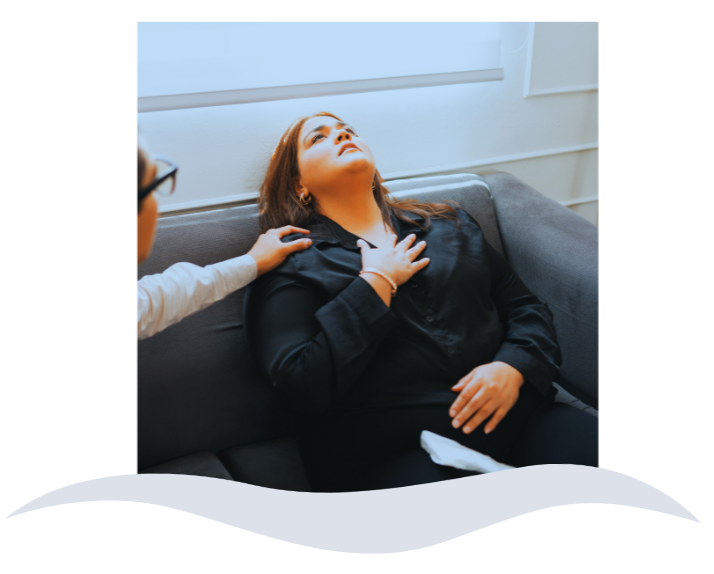
Interoceptive exposure is a specific technique used in Cognitive Behavioral Therapy for panic disorder and related anxiety conditions. The word “interoceptive” refers to the internal sensations your body produces: the racing heart, the shortness of breath, the dizziness, the chest tightness. Interoceptive exposure involves deliberately and gradually inducing those sensations in a controlled setting, so that you can learn, through direct experience, that they are uncomfortable but not dangerous.
The technique was developed as part of the broader CBT framework for panic disorder, grounded in research by David Barlow and colleagues in the 1980s and 1990s. It addresses a specific problem that sits at the heart of panic disorder: the fear of the physical sensations themselves. Most people with panic disorder are not afraid of the situation they are in when an attack occurs. They are afraid of what their body is doing. The racing heart becomes evidence of a heart attack. The dizziness becomes evidence of losing control. The shortness of breath becomes evidence that something is seriously wrong. Interoceptive exposure directly targets that fear.
By repeatedly experiencing these sensations in a safe, predictable, controlled environment, your nervous system learns something it cannot learn through reassurance alone: that the sensations are survivable, that they pass on their own, and that they do not require an emergency response. Over time, the sensations lose their power to trigger panic. What was once a five-alarm signal becomes background noise.
Interoceptive exposure is also used in the treatment of OCD, particularly for clients whose compulsions are driven by physical discomfort or the need to neutralize internal sensations.
How Interoceptive Exposure Works in Practice
What sessions look like
Interoceptive exposure is not something that happens without preparation. Before we begin any exposure work, we spend time building a clear understanding of your specific panic cycle: what sensations trigger the most fear, what thoughts follow, and what the fear is actually about. That understanding is not just background information. It is part of the treatment.
We then work through a hierarchy of sensation exercises, starting with the ones that produce the least distress and moving gradually toward the ones that feel most threatening. The exercises themselves are straightforward: spinning in a chair to produce dizziness, breathing through a thin straw to produce the sensation of restricted breathing, doing jumping jacks to raise the heart rate. None of them are dangerous. All of them are designed to reproduce, in a controlled way, the physical experience your nervous system has learned to fear.
The exposure is never sprung on you. You will understand exactly what we are doing, why we are doing it and what to expect at every step. You will always have a say in the pace. The goal is to move at a speed that is challenging enough to produce real change without being more than you can manage.
Who this approach can help
Interoceptive exposure is particularly effective for people with panic disorder, especially those who have started to avoid physical activity, certain environments or any situation that might raise their heart rate or produce unusual body sensations. It is also valuable for people with health anxiety and for OCD clients whose distress is rooted in physical sensations or the urgency to neutralize internal discomfort.
Research consistently shows that interoceptive exposure, as part of a broader CBT protocol, produces significant and lasting reductions in panic frequency, panic severity and avoidance behavior. It is one of the most evidence-based components of panic disorder treatment available.


My Training and Experience with Interoceptive Exposure
I am Hafina Allen, a Licensed Clinical Social Worker and Board-Certified Telemental Health Provider with more than 20 years of experience. I use interoceptive exposure as part of my CBT work with clients navigating panic disorder and OCD, and I have trained in its application through my broader CBT training and specialized panic disorder work.
I came to interoceptive exposure both through clinical training and through personal experience. In my own earlier life I struggled with panic disorder and CBT, including the work of learning to face and tolerate the physical sensations of panic, is what helped me. That experience has shaped how I introduce this technique to clients. I understand why it sounds counterintuitive. I understand why the instinct is to avoid anything that might bring on those sensations rather than deliberately seek them out. And I also understand, from the inside, what it is like when that relationship with your own body finally shifts.
My practice is entirely telehealth, which means interoceptive exposure exercises are conducted via video session. This works effectively and has the added advantage of taking place in your own environment, which for many clients is the setting most associated with panic. I work with adults across New York, New Jersey, Connecticut, Florida, Illinois and North Dakota.
Ready to Stop Fearing Your Own Body?
Panic disorder is treatable, and interoceptive exposure is one of the most effective tools available. I offer a free 15-minute consultation, no pressure, no commitment, just a real conversation about what you are experiencing and whether working together is the right fit.
Recent Blog Posts



Interoceptive Exposure Therapy
Brooklyn, NY
Therapy across New York, New Jersey, Connecticut, Florida, Illinois & North Dakota