

Phobia Therapy - Brooklyn, NY & New York City
Your Fear Has Been Making Your Decisions for You.
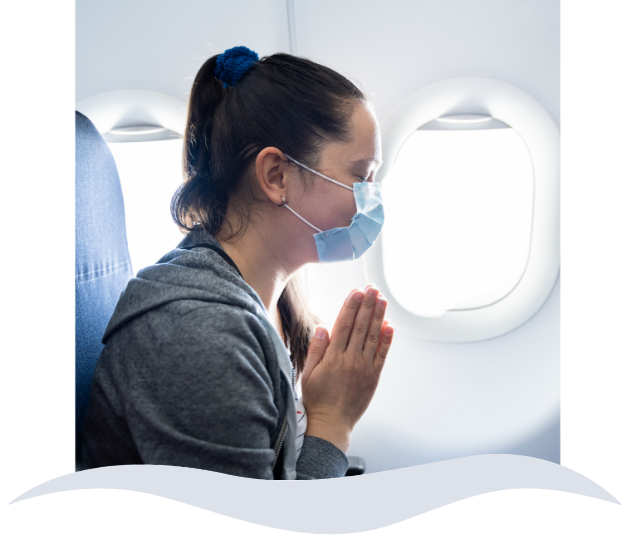
Has a Specific Fear Started Running Your Life?
Have you turned down a trip, a job opportunity or an invitation because it would mean facing the thing you fear?
Do you find yourself planning routes, schedules or entire days around avoiding a specific trigger?
Does the fear feel completely disproportionate to the actual danger and yet utterly real in the moment?
A phobia is more than just a strong dislike of something. It is an intense and persistent fear of a specific object or situation, one that is often recognized as excessive even by the person experiencing it, and that triggers a real physical fear response: racing heart, shortness of breath, dizziness, a powerful urge to escape. The fear itself might center on flying, driving, needles, heights, certain animals, germs, vomiting, enclosed spaces or any number of other specific triggers. What they all share is the same underlying pattern of avoidance.
Avoidance feels protective in the moment. It is also the thing that keeps a phobia firmly in place. Every time you avoid the trigger, you confirm to your nervous system that the danger was real and that escaping was the right call, even when the actual risk was minimal or nonexistent. Over time the avoidance tends to expand, quietly limiting more of your life than the original fear ever justified. A fear of flying becomes a life that never leaves driving distance. A fear of needles becomes years of avoided medical care. A fear of germs becomes a shrinking circle of people and places that feel safe.
This is not a character flaw and it is not something you should simply be able to talk yourself out of. Phobias are a well-understood pattern with a clear and effective treatment path. You do not have to keep organizing your life around what you are afraid of.
Phobias Are One of the Most Common and Most Treatable Conditions There Is.
Specific phobias are among the most common mental health conditions, affecting an estimated 7 to 9 percent of adults in the United States in any given year and as many as 12 percent over the course of a lifetime. If you have a phobia, you are far from alone, even if it does not always feel that way, since phobias are often managed quietly and privately for years.
Phobias can develop in several ways. Some begin after a specific frightening experience, a difficult flight, a medical procedure gone wrong, a frightening encounter with an animal. Others develop gradually with no clear single cause, sometimes learned indirectly by watching a parent or caregiver respond fearfully to the same trigger. Some phobias have been present since childhood and have simply never been addressed. None of these origins make a phobia more or less real, and none of them are a barrier to treatment.
The good news is that phobias respond extremely well to treatment, often more reliably and more quickly than many other anxiety-related conditions. The path through it is clear, well-researched and effective.
What Life Looks Like When the Fear Loosens Its Grip
You book the flight without spending weeks dreading it. You make the appointment you have been putting off for years. You say yes to the invitation without first calculating an exit strategy or a reason to decline. The specific thing that used to dictate so many of your decisions becomes, gradually, just a thing, manageable, sometimes even unremarkable.
Clients who have worked through a phobia often describe getting back something they had quietly stopped expecting: the freedom to travel, to socialize, to drive, to access medical care, to simply move through the world without a constant background calculation about where the trigger might be. The specific activity differs for everyone. The relief of reclaiming it tends to look the same.


I am Hafina Allen, a Licensed Clinical Social Worker and Board-Certified Telemental Health Provider with more than 20 years of experience. I treat phobias of any kind using the same evidence-based exposure framework, because the mechanism that maintains a phobia, the cycle of fear and avoidance, is consistent regardless of the specific trigger. Whether your fear involves flying, driving, needles, animals, germs or something else entirely, the treatment approach that works is fundamentally the same.
Because my practice is entirely telehealth, I work with adults across New York, New Jersey, Connecticut, Florida, Illinois and North Dakota. If a specific fear has been quietly shrinking your world, I would like to help you get it back.
How Phobia Therapy Works
The primary approach I use for phobias is Exposure and Response Prevention, often paired with cognitive work addressing the specific beliefs driving the fear. We begin by building a clear picture of your phobia: the trigger itself, the physical sensations it produces, the thoughts that accompany it and the ways you have been avoiding it. From there we build a hierarchy of exposure exercises, starting with situations that produce manageable anxiety and moving gradually toward the ones that feel most difficult.
Exposure is never sprung on you. You will understand exactly what we are doing and why at every step and you will always have a say in the pace. Through repeated and structured practice, your nervous system learns what it cannot learn through reassurance alone, that the feared outcome does not occur and that the anxiety itself rises and then passes. Most people see meaningful improvement in a relatively short course of treatment, and unlike avoidance, the change tends to hold.


-
Not at all. Phobias almost always feel irrational to the person experiencing them and that is actually part of what defines a phobia. Recognizing that the fear is disproportionate does not make it any less real or any easier to manage on your own. I treat every phobia with the same seriousness and respect, regardless of what the specific trigger is.
-
No. Exposure work is always gradually and built around a hierarchy that starts with what is manageable for you. Nothing happens faster than you are ready for and you will always have a say in the pace. The goal is steady, sustainable progress, not forcing a confrontation before you are prepared for it.
-
Not at all. The length of time a phobia has been present does not predict how well it will respond to treatment. Exposure and Response Prevention works by addressing the cycle of avoidance directly, regardless of how long that cycle has been running. Many of the people I work with have avoided their trigger for decades before finally addressing it.
-
That is common and it is something we can address together. Because I also specialize in anxiety and panic disorder treatment, I can work with the full picture rather than treating the phobia in isolation if that is what is needed. We will figure out what is driving what and build the right approach from there.
Things People Ask Before Reaching Out
You Don't Have to Keep Letting Fear Decide.
Whatever the specific fear, phobia therapy works and you do not have to face it alone. I offer a free 15-minute consultation, no pressure, no commitment, just a real conversation about what you are dealing with and whether working together is the right fit.
Recent Blog Posts

phobia treatment - Brooklyn, NY
Therapy across New York, New Jersey, Connecticut, Florida, Illinois & North Dakota