

Insomnia therapy · CBT-I
Your Body Is Exhausted.
Your Brain Just Won’t Get the Memo.
CBT-I is the gold-standard, medication-free treatment for chronic insomnia and it works.

Is Chronic Insomnia Making You Dread Your Own Bed?
Do you lie awake for hours, exhausted but unable to sleep, watching the minutes count down toward your alarm?
Does your mind shift into overdrive the moment the lights go out, even when nothing is actually wrong?
Have you started dreading bedtime because you already know what’s coming?
Maybe you’ve already tried the usual fixes: melatonin, white noise, a stricter bedtime, cutting out caffeine. Maybe you’ve read the sleep hygiene tips and followed them and none of it has made a real difference. And now, on top of the exhaustion, there’s this added frustration of having done everything right and still lying awake at 2am.
What makes chronic insomnia so hard to shake is the cycle it creates. The more you focus on trying to sleep, the more elusive it becomes. Your bed starts to feel like the place where sleep doesn’t happen for you. You find yourself calculating how many hours you’ll get if you fall asleep right now. By morning, even after a full night in bed, you wake up unrefreshed and carry that fog into everything else: your concentration, your mood, your patience, your relationships.
It’s easy to start believing this is just how you sleep now. But chronic insomnia is not permanent and it is not something you simply have to push through. It is a learned pattern and that means it can be unlearned. With the right treatment, most people see meaningful, lasting improvement in their sleep.
You Are Not the Only One Lying Awake Tonight
If you feel like everyone else somehow has no trouble sleeping, you are not getting an accurate picture. Insomnia is one of the most common health complaints in the country. According to the American Academy of Sleep Medicine*, about 30 percent of adults experience insomnia symptoms, and around 10 percent have insomnia severe enough to cause real daytime consequences. You are not unusual. You are not broken. You are dealing with something that is genuinely widespread and genuinely difficult.
Insomnia rarely has a single cause, and yours may have started in ways that feel very specific to you. Maybe it began during a period of high stress and simply never resolved once things calmed down. Maybe it has crept up gradually over years. Or maybe it runs alongside something else you are managing: anxiety, depression, chronic pain, hormonal changes, or a nervous system that has learned to stay on alert long after the reason to be on alert has passed. Whatever brought you here, you are not imagining it, and you are not alone in it.
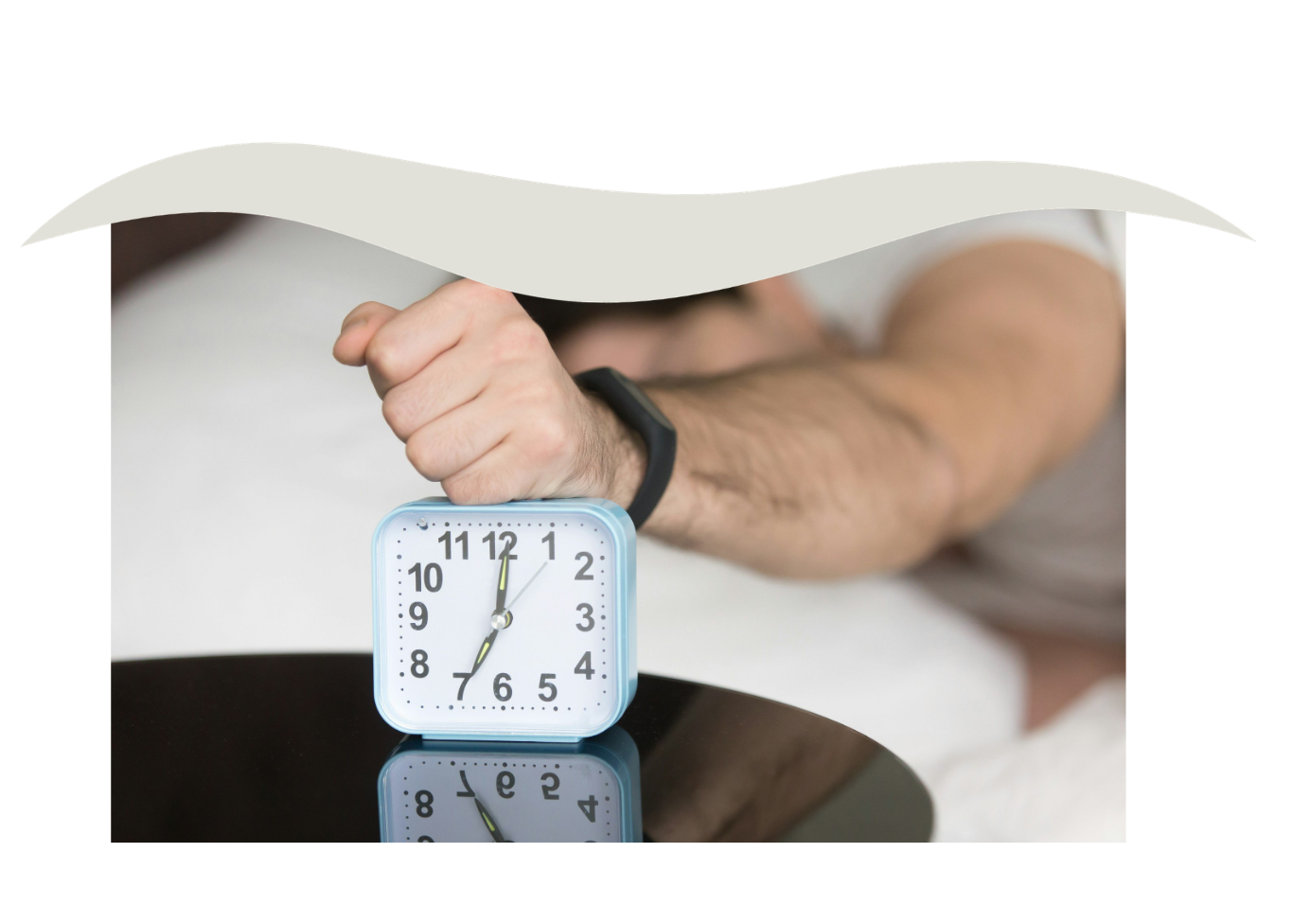
Insomnia Can Keep You Stuck in a Cycle That Feels Impossible to Break
One of the reasons insomnia is so hard to shift on your own is that the things you naturally do to cope, spending more time in bed, sleeping in, napping, avoiding activity, actually reinforce the very pattern keeping you awake. Sleep medication can help in the short term, but it does not address the underlying cycle, and many people find themselves dependent on it without seeing lasting improvement. Meanwhile, the sleep deprivation compounds. Concentration slips. Mood suffers. Relationships feel harder. And because poor sleep has become so normalized, many people wait years before seeking treatment.
Here is what the research is clear on: insomnia responds well to treatment. CBT-I, Cognitive Behavioral Therapy for Insomnia, is not only effective, it is the first-line treatment recommended above sleep medication by major medical bodies. Most people who complete it see significant, lasting improvement. Whatever has been keeping you awake, it does not have to stay that way.

What Sleep Looks Like When It Stops Being a Battle
You get into bed and your body remembers what it’s there for. You’re not running calculations. You’re not watching the minutes tick toward the alarm. You’re just tired, in the ordinary way, and sleep comes.
That sounds simple. For anyone who has been living with chronic insomnia, it sounds almost impossible. But it is where most people end up after completing CBT-I.
People describe mornings that feel different, not perfect, but genuinely rested. They stop dreading bedtime. The association between their bed and that particular brand of dread and frustration fades. They stop sleeping with one eye on the clock. Their mood steadies. Their concentration comes back. The irritability that had been bleeding into their relationships starts to ease. The things that felt impossible, following a conversation without losing the thread, getting through an afternoon without propping yourself up with caffeine, start to feel ordinary for you again.
Because here is what chronic insomnia takes from you that goes beyond the nights themselves. It takes your mornings, which start in deficit before the day has even begun. It takes your capacity to be present, in conversations, in your work, with the people you care about. It takes the version of yourself that has the bandwidth to handle the ordinary friction of life without being worn down by it. When sleep improves, those things come back too. Not all at once, and not perfectly, but they come back.
CBT-I works because it does not just mask the symptoms. It addresses the learned patterns underneath them, the thoughts about sleep that have become entrenched, the behaviors that are quietly reinforcing wakefulness, and the hyperarousal that keeps your nervous system on alert when it should be winding down. Because those patterns can be unlearned, the results hold. Research consistently shows that the gains people make through CBT-I are maintained long after treatment ends, which is not something that can be said for sleep medication.
This is the work I do with clients. Not just helping them get through the night, but helping them rebuild a relationship with sleep that is no longer defined by anxiety, effort, and frustration. Insomnia therapy does not have to be a long process. Most people see meaningful change within a handful of sessions. And what they gain, the skills, the understanding of their own sleep, the confidence that they can do this, stays with them.


What is CBT-I, and why does it work?
Cognitive Behavioral Therapy for Insomnia, or CBT-I, is a structured, evidence-based program that targets the thoughts and behaviors that keep chronic insomnia going. It is recommended as the first-line treatment for insomnia by both the American College of Physicians and the American Academy of Sleep Medicine, placed above sleep medication. That is not a minor distinction. It means that when the leading medical bodies weighed the evidence, CBT-I came out on top.
What makes CBT-I different from other approaches is that it goes after the root cause rather than the symptom. It works on three levels. First, it identifies and reframes the beliefs about sleep that are keeping you stuck, the catastrophizing, the clock-watching, the pressure to perform sleep that paradoxically makes it harder to come. Second, it uses behavioral strategies to rebuild the association between your bed and actual sleep. Third, it addresses the physiological hyperarousal, that wired-but-tired state, that keeps your nervous system from downshifting when it should.
Unlike sleep aids, which work only while you are taking them, CBT-I produces changes that hold. Research consistently shows that people who complete CBT-I maintain their gains long after treatment ends. There are no side effects, no dependency, and no ongoing prescription. What you learn in CBT-I becomes yours to keep, long after our work together is done.
CBT-I is also a shorter treatment than most people expect. It is not open-ended therapy. It is a focused, goal-directed process, and most people with insomnia see significant improvement within six to ten sessions. That is one of the things I appreciate most about it: it is designed to work, and then to let you get on with your life.
I am Hafina Allen, a Licensed Clinical Social Worker and Board-Certified Telemental Health Provider with more than 20 years of experience. My CBT-I training includes three full days of intensive, specialist instruction through the Beck Institute, one of the most respected names in cognitive behavioral training. Insomnia treatment is not a side offering in my practice. It is one of my core specialties, and it is work I take seriously.
I also practice what I teach. By nature I am a night owl. But understanding what the research says about consistent wake times changed how I approach my own sleep. I adjusted my schedule and now I often wake up just before my alarm. When a night is not great, I do not spiral. I know the next night will likely be better, and I focus on sleep quality rather than tracking hours. That shift, from anxious monitoring to genuine trust in your body’s ability to sleep, is exactly what CBT-I helps build. I have worked with people who had taken sleep medication every night for decades and were not sure life without it was possible. With time and the right approach, they got there.


Sleep aids vs. CBT-I — what the research shows
If you have ever relied on sleep medication, you already know what it does and does not do. It can take the edge off a rough night and for some people it has a short-term role. But it does not change the patterns keeping you awake, which means the insomnia tends to return the moment you stop taking it. Many people I work with have been on sleep medication for years, sometimes decades and are ready to try something that addresses the actual problem. That is exactly what CBT-I is designed to do.
The difference is not just clinical. For people who have been managing insomnia with medication for a long time, learning that there is another way, one that lasts, can feel like a genuine turning point.
Sleep medication
Works only while you're taking it
Can cause dependency over time
Side effects including grogginess and rebound insomnia
Doesn't address underlying patterns
Requires ongoing prescription
CBT-I
Results that last beyond the end of treatment
No dependency or side effects
Addresses the root cause, not just the symptoms
Recommended above medication by major medical bodies
Skills you keep for life
Things people ask before reaching out
-
Yes, and this is actually one of the most common presentations I see. Anxiety and insomnia reinforce each other in ways that can make both feel impossible to shift on their own. Because I specialize in anxiety treatment as well as CBT-I, I can address them together in an integrated way rather than treating one and hoping the other follows. We will look at which is driving which and work from there.
-
Not at all. CBT-I is actually most effective for chronic insomnia, the kind that has been present for months or years rather than weeks. The longer insomnia has been going on, the more entrenched the behavioral and cognitive patterns tend to be, and CBT-I is specifically designed to disrupt those patterns regardless of how long they have been in place. Duration is not a barrier to treatment.
-
Not necessarily, and not right away. If you are currently using sleep aids, we will talk about this together and coordinate with your prescribing physician. Many people find that as CBT-I progresses, they naturally need less medication. Any changes to medication are always made in consultation with your doctor, not unilaterally.
-
CBT-I is a specialized treatment, and it is quite different from general talk therapy. Most therapy addresses the emotional content of what you are going through. CBT-I addresses the specific cognitive and behavioral patterns that perpetuate insomnia, things like your relationship with your bed, your sleep schedule, and the thoughts that activate your nervous system at night. If previous therapy did not focus specifically on those mechanisms, it is not surprising that sleep did not improve. This is a different tool for a different job.
-
Often, yes. Even when insomnia begins as a response to a medical condition, chronic pain, hormonal changes, or a health event, it frequently takes on a life of its own over time. The original cause may be managed or resolved, but the sleep difficulties persist because the behavioral and cognitive patterns have become established. CBT-I is effective precisely because it targets those patterns directly, regardless of what initially triggered the insomnia. That said, if there is an underlying sleep disorder such as sleep apnea, I will always recommend that be evaluated and treated first.


Better Sleep Is Possible.
Let’s Find Out If We’re a Good Fit.
Maybe you are coming to insomnia treatment not just because you are tired, but because your sleep is affecting your ability to perform. You rely on being sharp, focused and present at work, and chronic insomnia is quietly eroding that. You are not looking for someone to tell you to put your phone down an hour before bed. You are looking for someone who understands the specific pressure of needing to function at a high level and can help you get your sleep back without it becoming another thing to manage.
I also have a particular interest in working with people who have been living with insomnia for a long time. If that is you, if you have tried every supplement, read every article and quietly started to wonder if this is simply how you sleep now, that is exactly the kind of chronic insomnia CBT-I is built for. The length of time you have been struggling is not a reason to be less hopeful. In many ways, it is a reason to be more.
Because I specialize in both insomnia and anxiety, I can work with the full picture of what is keeping you awake. And because my practice is entirely telehealth, I work with adults across New York, New Jersey, Connecticut, Florida, Illinois, North Dakota and New Hampshire. Geography is not a barrier to getting specialist insomnia treatment.
You do not have to keep pushing through exhausted. CBT-I works, it works without medication, and most people see real change within a handful of sessions. Schedule a free 15-minute consultation to talk about your sleep and find out if insomnia therapy with me is the right next step.
Insomnia treatment
CBT-i
Brooklyn, NY
Telehealth · NY · NJ · FL · CT · IL · ND · NH
Brooklyn, NY
26 Court Street, Suite 1001, Brooklyn, NY 11242